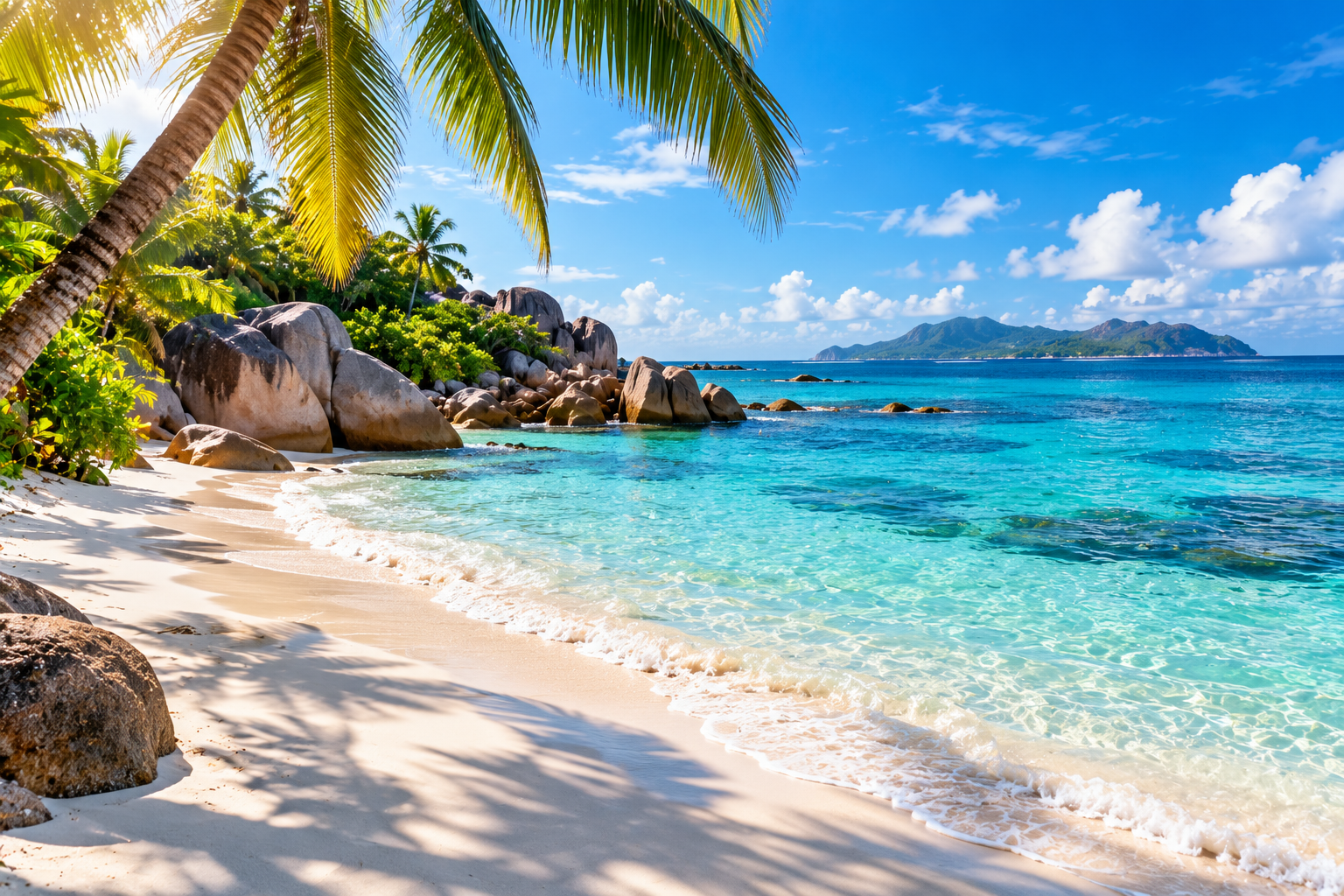
Most Beautiful Beaches in the World: 10 Stunning Places to Visit
There is no single objective best beach in the world, but several 2026 rankings highlight spectacular coastlines across the Philippines, Greece, Australia, Mexico and beyond. The World’s 50 Best Beaches named Entalula Beach in the Philippines its No. 1 choice for 2026, while Tripadvisor selected Isla Pasion in Mexico based on traveler reviews. Other beauty-focused rankings have placed Australia’s Whitehaven Beach at the top.
This list brings together 10 standout beaches known for clear water, remarkable sand, unusual scenery and memorable settings rather than pretending one shoreline can be objectively best for every traveler.
What Is the Best Beach in the World?
The answer depends on how “best” is defined.
In 2026, The World’s 50 Best Beaches ranked Entalula Beach in the Philippines No. 1, with Fteri Beach in Greece at No. 2. The list is based on input from judges, Beach Ambassadors and the publication’s team, with criteria that consider factors such as unique characteristics, untouched nature, wildlife, swimming conditions and crowd levels.
Tripadvisor reached a different result. Its 2026 Travelers’ Choice Best of the Best Beaches list placed Isla Pasion in Cozumel, Mexico, first, using the volume and quality of traveler reviews and opinions collected over a 12-month period.
A separate 2026 visual-beauty ranking covered by Travel + Leisure put Whitehaven Beach in Australia at No. 1.
So there is no universal winner. The best choice depends on whether you prioritize dramatic scenery, soft sand, swimming, seclusion, marine life or convenient access.
10 Most Beautiful Beaches in the World
| Beach | Country | Best known for |
|---|---|---|
| Entalula Beach | Philippines | Limestone cliffs, clear water and seclusion |
| Fteri Beach | Greece | Turquoise Ionian water and white cliffs |
| Whitehaven Beach | Australia | White silica sand and Hill Inlet |
| Nosy Iranja | Madagascar | Sandbar connecting two islands |
| Playa Balandra | Mexico | Shallow turquoise bay and desert scenery |
| Grace Bay | Turks and Caicos | White sand, clear water and easy swimming |
| Anse Source d’Argent | Seychelles | Granite boulders and shallow lagoon |
| Baía do Sancho | Brazil | Dramatic cliffs and marine environment |
| Elafonissi Beach | Greece | Pink-toned sand and shallow water |
| Dhigurah | Maldives | Long tropical beach and sandbank |
This is an editorial shortlist rather than a scientific ranking from first to tenth.
1. Entalula Beach, Philippines
Entalula Beach is in Palawan and combines many of the characteristics travelers picture when searching for the world’s most beautiful beaches: soft white sand, unusually clear water and dramatic limestone formations rising behind the shore.
The World’s 50 Best Beaches placed Entalula at No. 1 globally for 2026, highlighting its natural setting, relatively low crowd levels and calm, clear water.
It also feels distinctly different from a large resort beach. Access is by boat, which helps preserve a more secluded atmosphere.
Why it stands out: limestone scenery and a remote tropical setting.
Swimming: often appealing when conditions are calm, but sea conditions should always be checked locally.
When to consider going: the ranking’s climate data points to drier conditions from roughly December through April.
Practical limitation: getting there requires a boat, so it is less convenient than beaches reached directly by road.
2. Fteri Beach, Greece
Fteri Beach on Kefalonia offers a different version of beach beauty: brilliant turquoise Ionian water framed by pale cliffs and a white pebble-and-sand shoreline.
It ranked No. 2 in The World’s 50 Best Beaches for 2026.
The relative difficulty of reaching Fteri is part of its appeal. Visitors generally arrive by boat or water taxi, although there is also a steep hiking route. Local visitor information notes that the beach is unorganized, with no beach bar, so you need to bring water and supplies.
Why it stands out: vivid turquoise water surrounded by steep white cliffs.
Best for: travelers who value natural scenery and a less developed beach.
Seasonality: June and September can offer warm Mediterranean conditions with fewer crowds than the July–August peak.
Practical limitation: access takes more planning than a conventional resort beach.
3. Whitehaven Beach, Australia
Whitehaven Beach stretches for about seven kilometers along Whitsunday Island in Queensland.
Its defining feature is the exceptionally bright sand, which is approximately 98% silica. At the northern end, Hill Inlet creates the famous pattern of swirling white sand and turquoise water as the tides shift.
Whitehaven topped a 2026 beauty ranking covered by Travel + Leisure and also appears regularly in broader lists of visually remarkable beaches.
Why it stands out: unusually bright silica-rich sand and the tidal patterns at Hill Inlet.
Access: most visitors arrive by boat, sailing tour, seaplane or helicopter from destinations in the Whitsundays.
Swimming: possible in suitable conditions, although local operators advise visitors to consider seasonal marine-stinger conditions.
Practical limitation: it is not a drive-up beach, and tour inclusions vary considerably.
4. Nosy Iranja, Madagascar
Nosy Iranja is memorable because it is not simply one beach.
Two small islands are connected by a long strip of white sand surrounded by turquoise water. The sandbar is most visible and walkable around low tide, while rising water changes the landscape considerably.
The World’s 50 Best Beaches ranked Nosy Iranja No. 4 in 2026.
The destination also has important wildlife value, with sea turtles nesting in the area.
Why it stands out: the tidal sandbar joining two tropical islands.
Best for: unusual scenery, swimming and travelers looking beyond better-known Indian Ocean resorts.
Timing: tide matters as much as the season if seeing the full sandbar is a priority.
Practical limitation: the appearance of the beach changes with the tide, so the postcard view is not identical throughout the day.
5. Playa Balandra, Mexico
Playa Balandra near La Paz in Baja California Sur stands out because its landscape does not resemble a stereotypical palm-fringed tropical island.
Here, clear turquoise water sits against dry desert hills, shallow bays and a famous mushroom-shaped rock formation.
The water is notably shallow in many areas, creating a natural lagoon-like experience. Balandra is also a protected natural area, and access is controlled to reduce pressure on the ecosystem.
It ranked No. 8 in The World’s 50 Best Beaches for 2026.
Why it stands out: the contrast between turquoise water and arid Baja scenery.
Best for: shallow-water relaxation, photography, kayaking and unusual coastal landscapes.
Practical limitation: visitor capacity and access arrangements can change, so check the current local rules before arriving.
6. Grace Bay, Turks and Caicos
Grace Bay represents the classic Caribbean beach: a long stretch of soft white sand beside clear turquoise water.
Unlike some remote beaches on this list, it is also easy to combine with a conventional resort vacation. Much of Providenciales’ visitor infrastructure is centered around the Grace Bay area.
An offshore barrier reef helps protect much of the coast from Atlantic swell, and local tourism information describes conditions along the central beach as generally calm.
Why it stands out: a combination of attractive water, white sand and easy vacation infrastructure.
Best for: swimming, beach vacations and travelers who prefer convenience over a difficult journey to an isolated cove.
Practical limitation: it offers less of the remote, untouched feeling found at Entalula or Fteri.
Even in typically calm water, swimmers should use designated areas and follow local warnings.
7. Anse Source d’Argent, Seychelles
Anse Source d’Argent on La Digue is instantly recognizable because enormous rounded granite boulders sit between pale sand, tropical vegetation and shallow transparent water.
The Seychelles’ official tourism site describes it as one of La Digue’s main sights and highlights its granite formations, white sand and exceptionally clear water.
Rather than relying only on sand and sea color, the boulders give this beach a landscape that is difficult to confuse with anywhere else.
Why it stands out: dramatic granite formations.
Best for: photography, shallow-water scenery and travelers exploring La Digue.
Access: visiting commonly involves reaching La Digue and continuing through the island, often by bicycle or on foot.
Practical limitation: its fame means you should not expect complete solitude simply because photographs sometimes make it appear deserted.
8. Baía do Sancho, Brazil
Baía do Sancho lies on Fernando de Noronha, an island environment known for dramatic cliffs and rich marine surroundings.
The beach is enclosed by steep green cliffs above turquoise water. Land access is unusual: visitors can reach the beach through a staircase built into a narrow break in the rock, while boats can also visit the bay.
Travel + Leisure continues to include Baía do Sancho among its selections of the world’s most beautiful beaches.
Why it stands out: the combination of high cliffs, clear water and an offshore marine setting.
Best for: scenery and travelers interested in marine life as well as the beach itself.
Seasonality: local guidance notes that conditions vary, including stronger waves during part of the year.
Practical limitation: reaching Fernando de Noronha and navigating its environmental controls requires more planning than an ordinary mainland beach trip.
9. Elafonissi Beach, Greece
Elafonissi in Crete is known for shallow lagoon-like water and patches of pink-toned sand created by tiny shell fragments.
The important word is patches. The entire beach is not permanently bright pink; the color varies with location and natural conditions.
Visit Greece describes Elafonissi as a protected environment with shallow water and characteristic pink sand, while also warning that it receives very large numbers of visitors in summer.
Tripadvisor placed Elafonissi at No. 2 in its 2026 worldwide beach ranking.
Why it stands out: pink-toned sand and accessible shallow water.
Best for: travelers interested in unusual sand color and lagoon scenery.
Practical limitation: peak summer can be crowded, which changes the experience considerably compared with quiet promotional photographs.
10. Dhigurah, Maldives
Dhigurah offers the classic Maldives combination of soft white sand and clear Indian Ocean water, but it has an important distinction: this is an inhabited island, not simply a private luxury-resort island.
The beach extends toward a long sandbank where narrow white sand is surrounded by shallow water.
The World’s 50 Best Beaches ranked Dhigurah No. 7 globally for 2026, highlighting its long coastline, sandbank and generally calm water.
The area is also associated with snorkeling, diving and whale-shark excursions.
Why it stands out: a long Maldivian beach ending in an extended sandbank.
Best for: tropical scenery, swimming and marine activities.
When to go: drier periods generally improve the chances of clearer skies, although tropical conditions vary throughout the year.
Practical limitation: reaching the island requires an additional transfer after arriving in the Maldives.
Which Beach Has the Clearest Water?
There is no reliable scientific ranking proving that one beach has the clearest water on Earth.
Water clarity can change with:
- rainfall;
- wind;
- currents;
- tides;
- waves;
- plankton and other natural conditions.
Among the beaches in this selection, Entalula, Fteri, Playa Balandra, Grace Bay and Dhigurah are especially notable for clear-water conditions in favorable weather.
That does not mean water that looks crystal clear is automatically safe for swimming. Currents, depth, marine hazards and weather must be evaluated separately.
Which Beaches Have the Best Sand?
“Best sand” can mean very different things.
White Silica Sand — Whitehaven Beach
Whitehaven is the standout if exceptionally bright silica-rich sand is the priority. The beach is made up of about 98% silica.
Pink-Toned Sand — Elafonissi
Elafonissi offers something more unusual: pale sand with pink areas created by shell material.
Soft Tropical Sand — Grace Bay, Dhigurah and Entalula
These beaches better fit the classic image of soft pale tropical sand alongside clear turquoise water.
The best choice therefore depends on whether you value softness, unusual color or the landscape surrounding the beach.
Best Beaches for Swimming
For swimming, scenery should never be the only criterion.
Among this list, Grace Bay is particularly notable because its offshore reef often helps keep near-shore conditions relatively calm.
Playa Balandra is known for shallow water, while parts of Elafonissi also have lagoon-like shallows. Dhigurah and other Maldivian beaches can offer calm tropical swimming in favorable weather.
Conditions can change quickly with wind, tide and season. Check local warnings on the day of your visit rather than assuming a beach is safe because photographs show flat turquoise water.
Beaches With the Most Unusual Scenery
If “exotic” means visually unusual rather than simply tropical, several beaches stand out:
- Nosy Iranja: a tidal sandbar connecting two islands.
- Whitehaven: white silica sand forming tidal patterns at Hill Inlet.
- Anse Source d’Argent: enormous granite boulders against a shallow lagoon.
- Elafonissi: pink-toned shell sand.
- Entalula: steep limestone cliffs directly behind a white tropical beach.
These landscapes offer something beyond the familiar combination of palms, sand and blue water.
How We Chose These Beaches
This shortlist considers several different qualities:
- visual scenery;
- distinctive natural features;
- water and sand;
- swimming potential;
- surrounding environment;
- traveler feedback;
- current 2026 beach rankings;
- geographic variety.
Current sources include The World’s 50 Best Beaches, Tripadvisor Travelers’ Choice and recent editorial beauty selections from Travel + Leisure.
It is an editorial selection, not an objective scientific ranking of every beach on Earth.
Best Beach Rankings Do Not Agree — Here’s Why
Different rankings answer different questions.
The World’s 50 Best Beaches
Its 2026 list put:
Entalula Beach, Philippines — No. 1
Fteri Beach, Greece — No. 2
The organization uses judges and travel experts while considering defined beach qualities.
Tripadvisor Travelers’ Choice
Tripadvisor’s 2026 result put Isla Pasion in Mexico first and Elafonissi second. Winners are driven by traveler reviews and opinions collected over a 12-month period.
Beauty-Focused Rankings
A separate visual ranking reported by Travel + Leisure put Whitehaven Beach first, emphasizing its appearance, silica sand and turquoise water.
Another 2026 analysis reported by the publication reached yet another result, naming Tunisia’s Yasmine Hammamet Beach No. 1.
That is why best, most beautiful, most famous, most popular and most visited are not interchangeable claims.
Where Are the Best Beaches in the World?
Exceptional beaches are spread across very different regions rather than concentrated in one country.
This shortlist alone includes:
- Southeast Asia;
- the Mediterranean;
- Australia and the South Pacific region;
- the Indian Ocean;
- the Caribbean;
- South America;
- Mexico.
That geographic variety is part of why declaring one country or coastline universally superior does not tell travelers very much.
The world’s best beach ultimately depends on what you want from the trip: Entalula offers dramatic seclusion, Whitehaven is defined by extraordinary silica sand, while Grace Bay and Dhigurah deliver the clear water and pale sand associated with a classic beach vacation. Use rankings as inspiration rather than a universal verdict, then choose based on accessibility, season, swimming conditions and the type of coastline you actually want to experience.