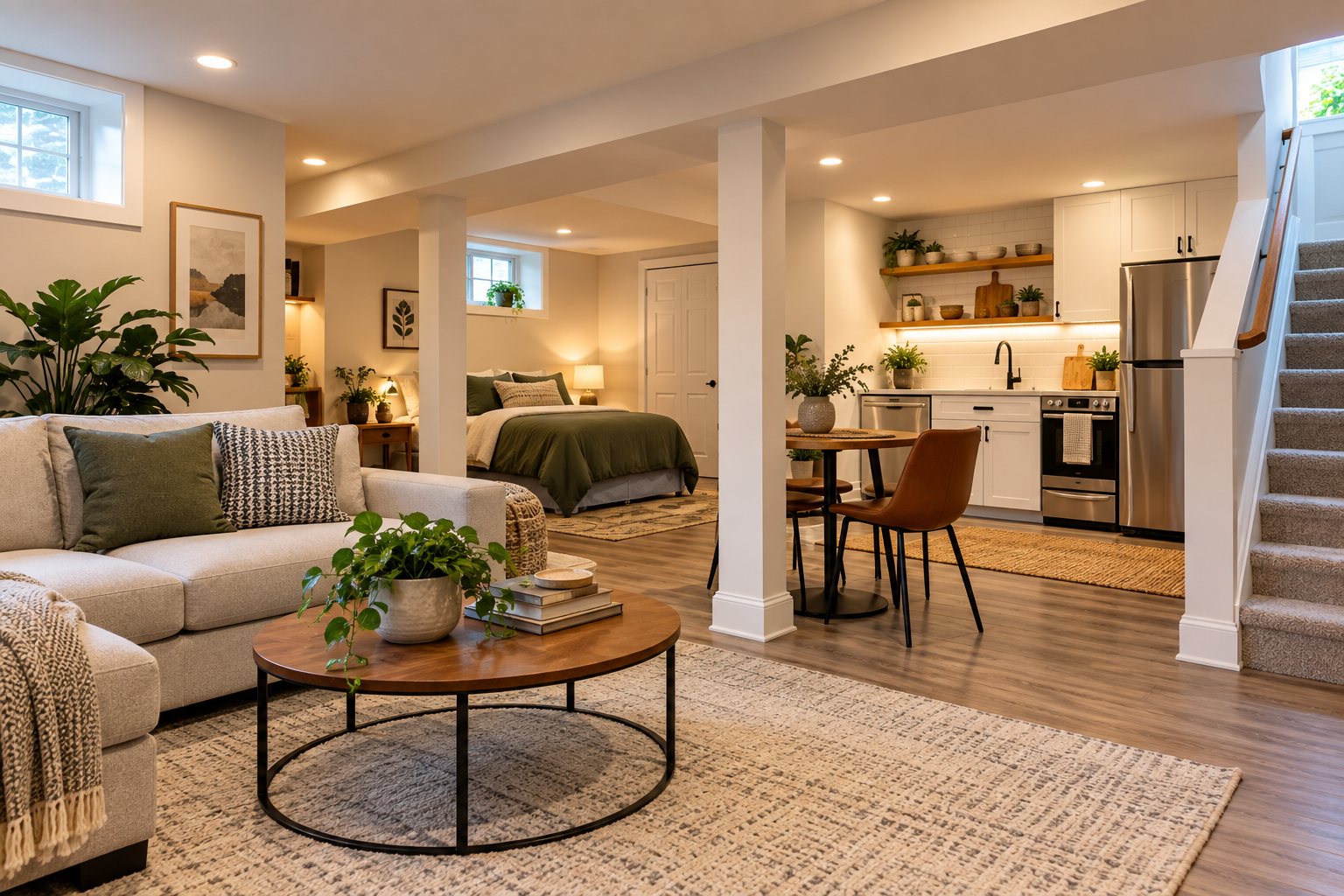
Best Furniture for a Small Apartment: Space-Saving Picks
The best furniture for a small apartment is compact, multifunctional and properly scaled to the room. Pieces such as a storage bed, compact sofa or sleeper sofa, drop-leaf dining table, storage ottoman and nesting tables can provide the same functions as several separate pieces while using less floor space. Tall shelving and wall-mounted furniture also help by moving storage upward instead of filling the room with wide cabinets.
Before buying anything large, measure both the available space and the furniture in every position in which it will be used.
What Is the Best Furniture for a Small Apartment?
The most useful small-apartment furniture usually does at least one of three things:
- performs more than one genuinely useful function;
- adds storage without requiring another cabinet;
- folds, stacks or becomes smaller when it is not needed.
Strong options include:
- Compact sofa or sleeper sofa
- Storage bed
- Murphy bed
- Drop-leaf or extendable dining table
- Storage ottoman
- Nesting tables
- Lift-top coffee table
- Wall-mounted or folding desk
- Tall shelving
- Modular furniture
- Stackable or folding chairs
- Slim entryway furniture
Current small-space guidance from both IKEA and Planner 5D emphasizes the same basic principles: multifunctional pieces, built-in storage, expandable furniture and better use of vertical space.
Planner 5D — Best Furniture for a Small Apartment
Measure the Apartment Before Buying Furniture
Furniture described as “apartment-size” is not automatically right for your apartment.
Measure:
- wall length;
- usable floor space;
- doorways;
- hallways;
- elevator or stair access;
- door-swing clearance;
- walking paths;
- space between large pieces.
Convertible furniture needs an additional measurement: its size when fully open.
A sleeper sofa that fits perfectly when closed may block the room when the bed is extended. The same issue applies to:
- drop-leaf tables;
- extendable dining tables;
- recliners;
- Murphy beds;
- folding desks.
Do not assume that smaller furniture is always better. Filling a room with many tiny tables, chairs and storage units can create more clutter than choosing a few properly scaled pieces.
1. Compact Sofa or Sleeper Sofa
The sofa is usually one of the largest pieces in a small living room, so scale matters more than labels.
Look for:
- a width proportional to the wall;
- moderate seat depth;
- relatively slim arms;
- enough seating for everyday use without an oversized footprint.
An enormous sectional can consume most of a small living room even if the room technically has enough square footage for it.
When a Sleeper Sofa Makes Sense
A sleeper sofa combines:
sofa + guest bed
and can be useful if you do not have a separate guest room.
Before buying one, check:
- dimensions with the bed fully extended;
- mattress comfort;
- sitting comfort;
- opening mechanism;
- required clearance in front.
If overnight guests are extremely rare, a good compact sofa may be more useful than sacrificing comfort or floor space for a sleeper mechanism you hardly use.
2. Storage Bed
A storage bed is one of the highest-value furniture choices for a small apartment because the bed already occupies a large area.
Instead of wasting the space underneath it, use a bed with:
- built-in drawers;
- lift-up storage;
- enough clearance for organized under-bed containers.
It can store:
- bedding;
- seasonal clothes;
- shoes;
- luggage;
- extra towels.
That may reduce the need for a separate dresser or storage chest.
IKEA’s current small-room guidance similarly recommends beds with built-in drawers and other multifunctional pieces that combine essential furniture with storage.
IKEA — Furnishing and Decorating a Small Room
3. Murphy Bed for a Studio Apartment
A Murphy bed can be particularly useful in a studio where the same room functions as:
- bedroom;
- living area;
- home office.
Folding the bed away during the day can free a substantial amount of usable floor area.
But a Murphy bed is not automatically better than a conventional storage bed.
Consider:
- purchase and installation cost;
- wall requirements;
- how easy it is to open every day;
- storage around the bed;
- whether permanent mounting is allowed.
Renters should not install wall-mounted furniture without checking the lease and getting permission where required.
If you already have a separate bedroom, a normal storage bed may be the simpler and more practical solution.
4. Drop-Leaf or Extendable Dining Table
A large fixed dining table can occupy valuable space even if one or two people use it most of the week.
A better strategy is:
buy for everyday use, expand for occasional use.
Drop-Leaf Table
One or both sides fold down when they are not required.
This works well in small kitchens and combined living/dining areas.
Extendable Dining Table
The everyday footprint remains relatively compact, but the surface expands when guests arrive.
Wall-Mounted Folding Table
For very small kitchens or studios, a wall-mounted table can disappear almost completely when it is not being used.
Measure the space with the table both closed and fully extended.
5. Storage Ottoman
A storage ottoman offers an excellent utility-to-footprint ratio.
One piece can function as:
- footrest;
- occasional extra seat;
- hidden storage;
- coffee-table substitute when used with a tray.
Inside, you can keep:
- blankets;
- pillows;
- games;
- small household items.
In a very compact living room, a storage ottoman can sometimes replace both a conventional coffee table and a separate storage basket or chest.
6. Nesting Tables
Nesting tables provide several surfaces without permanently using the floor space required by several individual side tables.
For everyday use, the smaller tables slide beneath the largest one.
When you need them, separate them for:
- drinks;
- laptops;
- snacks;
- temporary side tables for guests.
They are particularly useful when the room layout changes frequently.
Unlike a large coffee table, they can also be moved individually when you need more open floor area.
7. Lift-Top Coffee Table
A lift-top coffee table can make sense when the living room also functions as a workspace or occasional dining area.
It can combine:
- coffee table;
- laptop surface;
- casual dining surface;
- storage.
However, multifunctional furniture is only useful when its functions are genuinely practical.
Before buying one, test or check:
- lifting mechanism;
- work-surface height;
- knee clearance;
- storage depth;
- dimensions when raised.
A complicated table with several transformations is not a space saver if using those functions requires moving the sofa and rearranging half the room every time.
8. Wall-Mounted or Folding Desk
Working from home can be difficult when there is no dedicated office.
Small-space desk options include:
- floating desks;
- wall-mounted drop-down desks;
- narrow consoles that double as desks;
- shelving systems with an integrated work surface.
A folding desk can be closed after work so the room returns to its other function.
Before choosing one, consider:
- laptop versus desktop use;
- monitor size;
- chair clearance;
- cable management;
- storage for work equipment;
- wall-mounting restrictions.
A narrow conventional desk may actually be better if you work from home every day and need several monitors.
9. Tall Shelving Instead of Wide Storage
When floor space is limited, look upward.
Instead of adding several low cabinets across the room, consider:
- tall bookcases;
- narrow shelving towers;
- wall shelves;
- vertical modular storage.
Tall furniture can provide substantial storage while using a relatively small footprint.
This principle is also emphasized in current small-space furnishing guidance: vertical storage helps use wall height rather than consuming additional floor area.
If a tall bookcase or cabinet requires anchoring, follow the manufacturer’s instructions—particularly in homes with children or pets.
10. Modular Furniture
Modular furniture can adapt when your apartment layout or living situation changes.
Examples include:
- modular sofas;
- cube storage;
- configurable shelving.
If you move, individual sections may be easier to:
- rearrange;
- separate;
- fit into a differently shaped room.
But the word modular does not automatically mean space-saving.
A huge modular sectional can take up more room than a simple compact sofa. Always compare actual dimensions and the configuration you intend to use.
11. Stackable or Folding Chairs
If you need seating for guests only occasionally, there is little reason to dedicate permanent floor space to several full-size dining chairs.
Consider:
- folding chairs;
- stackable stools;
- lightweight occasional chairs.
They can be brought out when needed and stored afterward.
This works especially well with an extendable or drop-leaf dining table: both the table and the number of seats can adapt to the number of people actually using the space.
12. Slim Entryway Furniture
A small entryway can become difficult to use when deep storage cabinets reduce the width of the main walking path.
Better options include:
- shallow shoe cabinets;
- narrow consoles;
- wall hooks;
- slim benches with hidden storage.
The priority is maintaining clear circulation.
A storage cabinet is not useful if everyone has to turn sideways to get through the hallway.
Best Furniture for Each Part of a Small Apartment
| Area | Furniture that works well |
|---|---|
| Living room | Compact sofa, storage ottoman, nesting tables |
| Bedroom | Storage bed, tall wardrobe |
| Studio | Sleeper sofa or Murphy bed |
| Dining area | Drop-leaf or extendable table |
| Home office | Wall-mounted or folding desk |
| Entryway | Narrow shoe cabinet, storage bench |
| General storage | Tall shelving, modular cabinets |
These are starting points rather than rules. The best furniture depends on the shape of the apartment and how you actually use each room.
What Furniture Should You Avoid in a Small Apartment?
Oversized Sectionals
A sectional that dominates the living room can make movement difficult and limit future layout changes.
Large Fixed Dining Tables
If only one or two people use the table daily, a large six-person table may consume valuable floor space unnecessarily.
Bulky Armchairs
Wide arms and very deep seats can make one chair occupy almost as much space as a compact sofa.
Too Many Single-Purpose Pieces
A room containing a coffee table, footstool, storage chest and several side tables can often be simplified.
A storage ottoman or nesting-table set may perform several of those functions.
Furniture That Blocks Walkways
Avoid pieces that interfere with:
- doors;
- drawers;
- kitchen access;
- main walking paths.
Convertible Furniture You Will Never Convert
Do not buy a complicated piece merely because it has five possible configurations.
If changing functions is inconvenient, you probably will not use them.
Should Small-Apartment Furniture Have Legs?
Furniture raised on visible legs can make a room feel visually lighter because more floor remains visible underneath.
This can work well for:
- sofas;
- sideboards;
- cabinets.
But it is not a requirement.
A cabinet extending to the floor may provide more usable storage. The choice is really between:
visual openness vs. maximum storage capacity.
Choose whichever solves the bigger problem in your apartment.
Light or Dark Furniture for a Small Apartment?
You do not have to buy only white or pale furniture.
Light finishes can contribute to an open appearance, but furniture scale and layout usually matter more.
Dark furniture can work perfectly well when:
- the pieces are not oversized;
- the room has adequate light;
- the number of large dark pieces is controlled;
- the overall layout avoids visual clutter.
Color should therefore be a design decision rather than a rigid small-space rule.
How to Choose Furniture for a Small Apartment
Before buying each major piece, ask:
Does It Fit?
Measure both its final location and the route into the apartment.
Does It Perform More Than One Useful Function?
A second function is valuable only if you will actually use it.
Does It Add Storage?
Built-in storage is particularly useful in beds, ottomans and benches.
Can It Shrink or Fold Away?
Expandable tables, folding desks and stackable chairs can return floor space when they are not required.
Does It Preserve the Walking Path?
Good furniture should not make normal movement through the apartment inconvenient.
Do I Actually Need It?
In a small apartment, every large piece needs to justify the floor area it occupies.
For a small apartment, the best furniture is not necessarily the smallest—it is the furniture that provides the most useful function without wasting floor space. Start with the largest essentials, such as the sofa and bed, then add storage and flexible pieces only where they solve a real need. Measuring carefully and choosing a few well-proportioned multifunctional pieces usually works better than filling the apartment with many small items.